 Zebra Intelligent - Intelligent Tool Cabinet, Intelligent Material Cabinet, Intelligent RFID Tool Cabinet, Intelligent Racking, Intelligent Warehouse Management



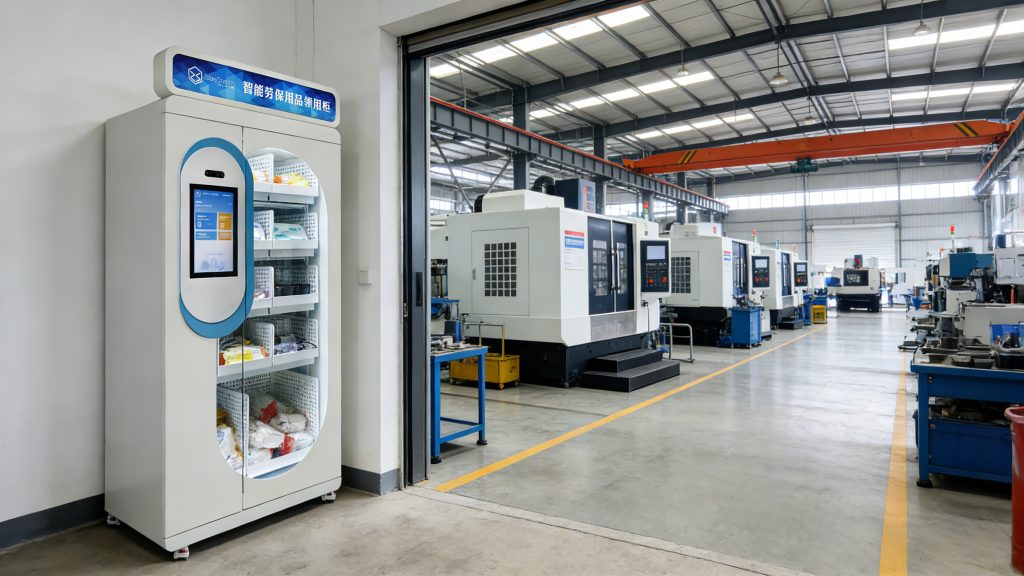
Door-type intelligent weighing material management cabinet in the workshop line material management in the application - Talk about the production of auxiliary materials management digitalization of the road to cost reduction and efficiency gains
I. Introduction: Material Management Innovation under Digital Transformation in the Manufacturing Industry
In the global manufacturing industry to intelligent, flexible transformation of the background, workshop line material management as a key node of the production process, is facing unprecedented challenges. According to statistics, China's industrial enterprises above designated size, the production of auxiliary materials waste rate is generally more than 8%, due to material shortages caused by the production line stopping an average of 1.2 times per month, direct economic losses accounted for the output value of 3%-5%. In this context, the door intelligent weighing material management cabinet with its “accurate measurement + real-time interconnections + intelligent decision-making With its ”accurate measurement + real-time interconnection + intelligent decision-making" core ability, it has become an innovative tool to crack the predicament of traditional management mode. In this paper, we will analyze how this digital solution reconfigures the production of auxiliary materials management system from the technical principles, application scenarios and value creation in three dimensions, helping enterprises to achieve the goal of cost reduction and efficiency.
Second, the five major pain points of the traditional lineside material management
2.1 Distortion of data due to manual manipulation
Relying on paper documents or Excel forms to record material receipt/return information is prone to human errors such as clerical errors and omissions. According to the research of an auto parts factory, there are 27 cases of discrepancies between accounts and facts caused by recording deviations in the stamping shop every month, forcing warehouse personnel to spend a lot of time checking the physical objects. More seriously, the wrong data feedback will lead to the procurement plan deviation from the actual demand, forming a vicious cycle of “the more management, the more chaotic”.
2.2 Static stockpiles are difficult to cope with dynamic changes
The traditional ERP system has a long update cycle (usually T+1) and cannot reflect the rapidly changing material consumption of the production line. When a new car launch triggered a surge in orders, the paint shop urgently needed special coatings often lag 3-5 days to be in place, forced to use high-priced alternatives for emergency response, the cost of a single batch increased by 15% or more. This “bullwhip effect” is especially prominent in the multi-species small batch production mode.
2.3 Lack of process control breeds a black hole of waste
The model of open shelves + free pickup makes the phenomenon of over-collection and private transfer frequent. During the peak season, a home appliance enterprise found that workers pushed the whole box of screws directly into the workstation area for convenience, resulting in a large number of scattered losses. It was estimated that the enterprise's annual hidden loss thus generated was equivalent to 2.8% of the total output value.
2.4 Difficulty of traceability constrains quality improvement
When the product quality problems need to trace back to the material batch, the manual ledger is like a “heavenly book”. A food processing plant was complained about abnormal thickness of packaging film, but because it was impossible to locate which roll of raw materials was used, all batches of finished products were eventually recalled, resulting in heavy losses. This lack of traceability is a serious obstacle to the advancement of lean production.
2.5 Poor space utilization exacerbates pressure on warehousing
Disorderly stacking of spare materials to occupy a large number of valuable space, forcing enterprises to expand the plant. A machinery manufacturing enterprises to calculate an account: a new three-dimensional warehouse needs to invest 8 million yuan, and through the optimization of the existing layout can release the same capacity of storage space, the two cost-effective difference.
Third, the door type intelligent weighing material management cabinet technology breakthrough and functional innovation
To address the above pain points, the new generation of door-type intelligent weighing material management cabinet through the integration of the Internet of Things, artificial intelligence and automatic control technology, to build up a closed-loop management system for the whole process, and its core technology architecture contains three major modules:
3.1 Physical Layer: Modular Hardware Portfolio
- Load-bearing weighing hopperAdopting high precision strain gauge sensor (accuracy ±0.01kg), the maximum load can be up to 500kg, which can meet the demand of measuring large materials. Built-in temperature compensation circuit ensures high stability in low temperature environment.
- Adaptive clamping mechanismThe robotic arm is equipped with an infrared range finder, which can automatically adjust the gripping strength according to the material size, and is compatible with a variety of forms, such as cartons, trays, and loose parts. After a trial in a logistics center, the efficiency of handling shaped parts was increased by 40%.
- Environment Sensing Unit: Integrated temperature and humidity sensors, smoke detectors and gas analyzers for special protection against flammable and explosive chemicals. When the concentration of ethanol exceeds the standard, it automatically starts the exhaust system and locks the cabinet door.
3.2 Control Layer: Edge Computing Hub
- Localized data processing: Equipped with a localized AI chip, it can run basic functions independently in case of disconnection. Through the federal learning mechanism, each terminal shares the experience model without leaking the original data, guaranteeing information security.
- dynamic routing algorithm: Optimize the picking path according to real-time working conditions, enabling the average daily throughput of a single cabinet to reach more than 1,200 times. In an application in a new energy battery factory, the algorithm shortened the pickup time from an average of 9 minutes to 47 seconds.
- self-diagnostic system: Use vibration spectrum analysis to predict mechanical failures and issue warnings 72 hours in advance. Maintenance personnel can receive visual guidance through AR glasses to keep downtime to less than half an hour.
3.3 Application layer: cloud-based collaboration platform
- 3D Visualization Kanban: A virtual simulation interface developed based on the Unity engine, mapping the physical world state in real time. Administrators can view the operating status of devices in any location around the world on their cell phones with a latency of less than 200ms.
- Intelligent replenishment engine: Combined with the production beat data in the MES system, LSTM neural network is applied to predict the material demand in the next 6 hours. After the application in an injection molding workshop, the safety stock level dropped by 35% and the number of out-of-stocks went to zero.
- Blockchain Depository Services: Each transaction record generates a unique hash value to be written into the private chain, and forensic organizations can directly access the tamper-proof evidence chain. In a quality audit of a pharmaceutical group, the system helped to quickly clarify the attribution of responsibility and avoid millions of dollars in potential compensation.
IV. Typical application scenarios and evidence of benefits
4.1 JIT distribution optimization for automotive assembly lines
FAW-Volkswagen Changchun Base has realized the following changes after the introduction of door-type intelligent cabinets:
✅ On-demand light picking: When the ANDON system is triggered, the indicator light of the corresponding workstation turns red, and the staff takes the materials precisely according to the light number, eliminating wrong and missing materials.
✅ Dullness proofing of weight calibration: Weighing twice before and after each pickup, with an immediate alarm for discrepancies above a threshold. Since implementation, the misloading rate has been reduced to three parts per million.
✅ Pull replenishment mechanism: Kanban system links AGV carts to automatically call for replenishment when a carton's stock falls below the lower limit. Compared with the original timed delivery mode, the line-side inventory turnover rate increased by 60%.
👉 quantitative income: Single-vehicle assembly time shortened by 8 minutes, annual production capacity increased by 12,000 units; return rate decreased by 42%, after-sales cost savings of 8.6 million yuan.
4.2 Cleanroom management in the electronics industry
Foxconn Shenzhen Park has customized the development of dust-proof grade intelligent cabinets for the special characteristics of PCB board placement process:
✨ ESD anti-static design: Cabinet grounding resistance <1Ω, the internal laying of conductive rubber mats, effectively eliminating the risk of static electricity accumulation.
✨ hierarchical control of authority: Engineer card to open all drawers, operator limited to specified level. Biometric + Dynamic password dual authentication to prevent unauthorized access.
✨ Humidity sensitive component protection: Built-in molecular sieve desiccant to maintain relative humidity ≤ 40%RH. Since its inception, the percentage of failure of moisture-sensitive devices after opening has dropped from 1.7% to 0.1‰.
👉 business value: The annual revenue from yield improvement is about 23 million yuan, and the payback period for equipment investment is only 1.8 years.
4.3 Hazardous materials regulation for chemical companies
Wanhua Chemical Deploys Explosion-Proof Smart Cabinets in Yantai Industrial Park to Overcome High-Risk Scenarios:
⚠️ intrinsically safe design: ExdIIBT4 explosion-proof enclosure, even if an explosion occurs inside, it will not be transmitted to the outside. The pressure relief valve can release the shock wave within 0.1 seconds.
⚠️ Two-man receiving and dispatching system: To collect highly toxic products, two people's fingerprints must be swiped successively, and the door can only be opened after the second person has confirmed it. Video surveillance automatically captures facial features for archiving.
⚠️ Emergency response to leaks: The bottom is equipped with a deflector tank connected to a collection well, which closes the valve and pushes an alarm as soon as a liquid leak is detected.
👉 social benefitThe company has maintained the record of “zero accident” for three consecutive years, and has been awarded the title of Level 1 Enterprise of Work Safety Standardization by the Ministry of Emergency Management.
V. Implementation path and critical success factors
5.1 Progressive deployment strategy
| point | goal | Key technical support | Expected results |
|---|---|---|---|
| Pilot first | Single production line to verify feasibility | RFID + Basic Weighing | Recover hardware costs within 3 months |
| Localized promotion | Replication of successes in workshops of the same type | Edge Computing + Lightweight MES Docking | Coverage of 80% within six months |
| global coverage | Cross-plant connectivity | Industrial Internet Platform + Big Data Cockpit | Annual consolidated efficiency gains ≥25% |
5.2 Supporting measures for organizational change
- Reinventing the Job: Created a new role of “material scheduler” to monitor system operations and recommend improvements. Breaking down departmental barriers and empowering them with cross-functional coordination.
- performance traction: Include indicators such as inventory turnover and on-time delivery in the KPI assessment, and the bonus pool is linked to the amount of savings. The practice of a listed company showed that this move led to a threefold increase in the number of employees taking the initiative to propose improvement programs.
- cultural cultivation: Regular “Digital Craftsman” skill competitions are organized to encourage frontline staff to explore the value of data. Outstanding cases will be included in the internal knowledge base of the enterprise.
5.3 Eco-cooperative system building
- Supplier Collaboration: Open API interface to upstream vendors to allow them to view VMI warehouse stock levels. When inventory falls below the warning line, a reminder notice is automatically sent. A fastener supplier adjusts delivery frequency accordingly, reducing transportation costs by 18%.
- Equipment Vendor Co-Construction: Jointly develop specialized fixtures with industrial robot manufacturers to expand the boundaries of application scenarios. Currently, it has supported the automated access of non-standard parts such as bearing inner and outer rings and hydraulic valve blocks.
- Empowerment of Academic Institutions: A joint laboratory was built to tackle the challenge of machine vision to recognize complex workpieces. A new convolutional neural network developed by a Tsinghua team enables the sorting accuracy of shaped parts to reach 99.2%.
VI. Future direction of evolution
With the maturity of 5G+TSN (Time Sensitive Network) technology, door-mounted intelligent weighing material management cabinets will usher in a new wave of upgrades:
🚀 Millisecond synchronized controlThe network timing protocol enables nanosecond synchronization of multiple devices to meet the ultra-high precision requirements of semiconductor wafer handling.
🚀 Digital twin deepens applicationThe BMW Group is using this system to simulate the flow of materials under various operating conditions during the development phase of new products, by constructing a complete mirror image of the physical world. The BMW Group is already using it in the pilot production of new energy models.
🚀 Autonomous decision-making evolution: Reinforcement learning algorithms continuously optimize scheduling strategies, which theoretically can increase system performance by 3%-5% per month.The AlphaGo style algorithms developed by Google DeepMind are changing the game in smart manufacturing.
Conclusion: The Way to Smart Manufacturing
Door-type intelligent weighing material management cabinet is by no means a simple pile of hardware, but a systematic innovation that integrates industrial engineering, information technology and management science. What it represents is not only the progress of tools, but also the revolution of production mode. When every gram of material is accurately calculated, every movement is scientifically planned, the enterprise can truly realize the ideal state of “zero waste, zero delay, zero defects”. In this sense, a small intelligent cabinet carries the big future of China's manufacturing transformation and upgrading.
