 Zebra Smart—Smart Tool Cabinets, Smart Supply Cabinets, Smart RFID Tool Cabinets, Enterprise Production Supply Management System




Intelligent control and precision, reshaping efficiency: intelligent material weighing rack opens a new era of precision mold workshop management
In the field of precision mold manufacturing, every micrometer of accuracy represents a core competitive advantage in product quality, and the efficiency and precision of production component management are the cornerstones that underpin this accuracy. Traditional material management models in mold workshops have long been constrained by the limitations of manual operations. From material issuance and weighing to inventory counts, these cumbersome processes not only consume significant labor costs but also act as hidden shackles that hinder improvements in production efficiency due to data errors and information delays. As the wave of smart manufacturing sweeps through the industry, the emergence of smart material weighing racks is injecting new momentum into production component management in precision mold workshops with its disruptive technological power, ushering in an efficiency revolution that shifts from粗放管理 to precise, intelligent control.
I. Breaking the Deadlock: Efficiency Constraints in Material Management in Traditional Mold Workshops
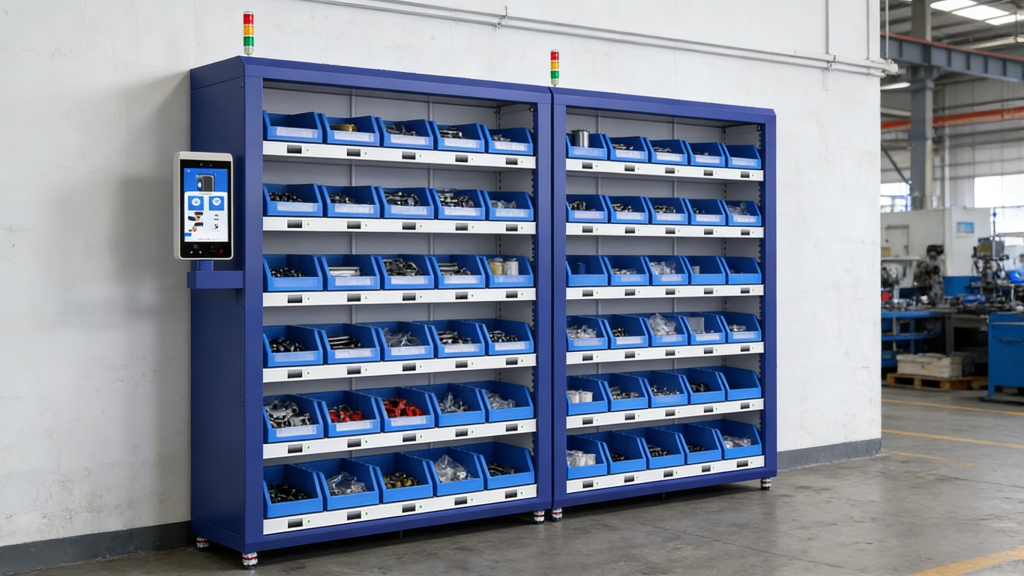
Production in a precision mold workshop is characterized by a wide variety of materials, precise specifications, and high material turnover rates. The production of a single precision mold often involves hundreds of components—ranging from basic steel raw materials to customized precision parts—and the precise control of each material directly impacts the mold’s machining accuracy and delivery cycle. However, numerous pain points inherent in traditional management models act like heavy shackles, severely hampering the workshop’s production efficiency.
Manual weighing and record-keeping are key weaknesses in traditional management. During the material issuance process, operators must manually transport materials to traditional weighing equipment and record information such as weight, specifications, and the person receiving the materials one by one. This process is not only time-consuming and labor-intensive but also prone to data discrepancies due to human error. According to industry research data, the material wastage rate in traditional mold workshops caused by manual weighing errors averages as high as 3%–5%. While these errors may seem minor, they accumulate into significant cost wastage in large-scale production. At the same time, the lag in information from paper records or rudimentary electronic ledgers makes it difficult for managers to monitor material inventory dynamics in real time, often leading to the awkward situation where inventory backlogs coexist with urgent material shortages—on the one hand, some infrequently used materials remain idle for long periods, occupying warehouse space and increasing inventory costs; on the other hand, temporary shortages of critical production materials directly lead to production interruptions, delayed delivery cycles, and damage to the company’s reputation.
In addition, the difficulty of tracing materials further exacerbates management risks. During the mold production process, if a batch of materials develops quality issues, under traditional management models, the traceability process requires significant manpower to sort through paper documents. This is not only time-consuming but also makes it difficult to ensure accuracy. Not only does this affect the efficiency of troubleshooting, but delays in traceability may also lead to quality risks in entire batches of products, resulting in incalculable losses for the company. Furthermore, the inefficiency of manual inventory counts puts inventory management at a disadvantage. Regular production halts for inventory counts not only consume production time, but discrepancies in inventory data can also lead to mismatches between book and actual inventory, hindering the precise formulation of production plans. These pain points in traditional management are like stumbling blocks scattered throughout the production process, constantly eroding the company’s production efficiency and cost advantages. A technological revolution is urgently needed to break this deadlock.
II. Smart Control Empowerment: Technological Innovations and Core Value of Smart Material Weighing Racks
The introduction of smart material weighing racks is not merely a simple equipment upgrade, but a systematic overhaul of the material management model in precision mold workshops. Supported by cutting-edge technologies such as the Internet of Things (IoT), big data, and artificial intelligence (AI), it deeply integrates functions such as precise weighing, intelligent control, and data traceability to create a comprehensive, end-to-end intelligent material management system. This system fundamentally resolves the challenges of traditional management and unlocks immense core value.
From a technical architecture perspective, the smart material weighing rack establishes a three-in-one intelligent management and control system. The rack is equipped with built-in high-precision weighing sensors—accurate to within 0.1 grams—that can precisely track changes in material weight in real time. With every material storage or retrieval operation, the system automatically measures the weight and records the data, completely eliminating errors associated with manual weighing. At the same time, the intelligent identification system integrated into the racks uses technologies such as RFID tags and QR code scanning to automatically identify key information about materials—including specifications, batches, and ownership—ensuring a precise link between materials and data and giving each item a unique digital identity. The cloud-based intelligent management platform serves as the smart hub of the entire system. It aggregates real-time weighing data, inventory status, and flow records, presenting this information to managers through a visual interface that provides a clear, at-a-glance view of material management status.
In terms of core value, the smart material weighing rack brings three major breakthroughs to workshop management. The first is precise control, which reduces material waste at the source. Through real-time, precise weighing and automatic data recording, every instance of material withdrawal, return, and consumption generates traceable, accurate data. This effectively prevents issues such as over-withdrawal and measurement errors caused by manual operations, keeping the material loss rate within 0.5% and significantly reducing production costs. Second is dynamic inventory management, which enables precise matching of supply and demand. The smart management platform synchronizes inventory data in real time; when material inventory falls below the safety threshold, the system automatically triggers a restocking alert; when materials remain idle for extended periods, the system pushes inventory optimization recommendations to help enterprises dynamically adjust their inventory structure. This not only prevents capital from being tied up in excess inventory but also eliminates production stoppages caused by material shortages, ensuring a precise match between material supply and production demand. Third is end-to-end traceability, which strengthens quality control. Leveraging digital records of material flow, information at every stage—from material receipt, issuance, and processing to finished product delivery—can be traced with a single click. In the event of a quality issue, the system can quickly pinpoint the source, flow path, and stage of use of the problematic material, significantly reducing investigation time and establishing a robust safety barrier for product quality.
III. A Leap in Efficiency: Smart Material Weighing Racks Transform the Entire Production Parts Management Process
The value of the intelligent material weighing rack is ultimately reflected in its ability to transform and enhance the entire process of production component management in precision mold workshops. From material receipt, issuance, and circulation to inventory counts, every stage has achieved a qualitative leap in efficiency, shifting production component management from a reactive approach to proactive control, and from a crude and inefficient system to one that is precise and efficient.
In the material receiving process, the traditional approach requires manual verification of material information, manual weighing, and filling out receiving forms—a process that is cumbersome and prone to errors. In contrast, the smart material weighing rack automates and streamlines the receiving process. Once materials arrive at the workshop, staff simply scan the material labels, and the system automatically retrieves the material information while high-precision sensors measure the weight. All data is synchronized in real time to the cloud-based management platform, automatically generating receiving records. The entire receiving process is shortened by more than 80%, and data accuracy reaches 100%, ensuring the accuracy of material information from the source and laying a solid foundation for subsequent management.
The improvement in efficiency during the production material issuance process has been particularly significant. In the past, production staff had to submit a material requisition request, wait for approval, and manually weigh and record the materials—a lengthy process that was prone to over-issuance. Now, with the help of smart weighing racks, production staff can independently complete material issuance simply by authenticating their employee ID. The system automatically records the type, weight, time of issuance, and user information for the materials issued. It also automatically calculates the appropriate quantity of materials required based on production work orders. When the issued weight exceeds the standard quantity, the system automatically issues a warning, effectively preventing material waste. This transformation has not only significantly streamlined the material issuance process and reduced approval wait times but has also enabled precise control over material issuance, ensuring that every unit of material is used where it is most needed.
In the material flow and traceability process, smart weighing racks establish a seamlessly integrated digital traceability chain. During the mold production process, materials are transferred through various processing stages; under the traditional model, it is difficult to track their status in real time. However, the smart shelving system is deeply integrated with the production management system. Every time materials are transferred to a new workstation, the system automatically updates their location and usage status, allowing managers to view the material flow path in real time via the management platform. If a quality issue arises with a particular batch of materials, simply entering the batch number allows the system to quickly display the entire chain of information for that batch—including the time of receipt, the person who issued the materials, the processing stage, and the finished product—enabling traceability within minutes. This leaves no room for quality issues to go unnoticed and provides robust support for production quality control.
The inventory counting process has taken a significant leap forward, transitioning from inventory counts during production stoppages to dynamic management. Under the traditional model, production lines had to halt operations periodically for manual inventory counts, which not only disrupted production schedules but also resulted in a high error rate in inventory data. The smart weighing racks collect material weight data in real time and, combined with the system’s built-in inventory calculation model, dynamically update inventory data to enable real-time, visual inventory management. Managers can monitor inventory quantities, storage locations, expiration dates, and other information for various materials at any time without halting production. The system also automatically generates inventory count reports, compares actual inventory with book records, and precisely identifies the causes of discrepancies. This makes inventory management effortless and efficient, completely eliminating the hassle of production halts for inventory counts and ensuring production continuity.
IV. Multidimensional Empowerment: Enhanced Comprehensive Benefits Brought by Smart Material Weighing Racks
The value of intelligent material weighing racks extends far beyond improving the efficiency of component management in production; they also deliver comprehensive benefits to precision mold workshops across multiple dimensions—including cost control, quality assurance, and decision-making optimization—serving as a key driver for companies’ transition to smart manufacturing.
In terms of cost control, smart weighing racks achieve dual reductions in labor and material costs. On the one hand, the automated weighing, recording, and inventory-taking processes significantly reduce the workload associated with manual operations. Tasks such as material registration and inventory counting—which previously required multiple staff members—are now automatically completed by the system, allowing companies to streamline their material management positions and lower labor costs. On the other hand, precise material control effectively reduces material waste and excess inventory. The significant decrease in material loss rates directly lowers raw material costs, while dynamic inventory management prevents capital from being tied up in excessive stockpiles, thereby improving cash flow and enabling companies to manage costs with greater precision.
In terms of quality assurance, smart weighing racks establish a robust quality defense line for mold production. A precise material traceability system enables rapid identification and timely resolution of quality issues, preventing them from escalating; real-time control of material usage ensures that production strictly adheres to process standards, eliminating product defects caused by improper material ratios. At the same time, by analyzing the correlation between material usage and quality through big data, companies can continuously optimize material selection and production processes, thereby improving product quality at the source, enhancing market competitiveness, and helping the company establish a high-quality brand image.
In terms of decision-making optimization, the vast amounts of data accumulated by smart weighing racks serve as the core foundation for enterprises to make informed decisions. The cloud-based management platform aggregates multi-dimensional information—including material flow, inventory dynamics, production consumption, and quality data—and, through big data analytics, generates visual reports on material consumption trends, inventory turnover rates, and production efficiency, providing enterprise managers with precise data-driven insights. Based on this data, managers can scientifically formulate production plans, optimize material procurement strategies, and adjust production processes, thereby shifting from experience-based decision-making to data-driven decision-making. This makes enterprise management more scientific and efficient, enhancing the company’s ability to respond to market changes.
In addition, the implementation of smart weighing racks has laid the foundation for the workshop’s digital transformation. It has broken down the information silos of traditional material management, enabling the interconnection of material data with production and financial data, and driving the workshop’s transition from partial digitization to end-to-end digitization. This digital transformation not only improves current management efficiency but also builds a data foundation and practical experience for the company to introduce more advanced smart manufacturing technologies and construct smart factories in the future, helping the company gain a competitive edge in the race toward smart manufacturing.
V. The Future Is Here: Smart Material Weighing Racks Pave the Way for Smart Manufacturing in the Mold Industry
As the intelligent transformation of the manufacturing sector accelerates, the precision mold industry is at a critical juncture in its transition from traditional manufacturing to smart manufacturing, and the intelligent management of production components is the key breakthrough in this transition. With their core advantages of precision, efficiency, and intelligence, smart material weighing racks not only address the pain points of traditional material management but also align with the mold industry’s intrinsic need for high-quality development, emerging as a key force in leading the industry toward a new era of smart manufacturing.
Currently, an increasing number of precision mold manufacturers are adopting smart material weighing racks to enhance their core competitiveness through technological innovation. Based on actual application results, companies that have implemented this equipment have generally achieved a significant improvement in material management efficiency, a marked reduction in material wastage, an effective shortening of production cycles, and a noticeable increase in overall benefits. These success stories fully demonstrate that smart material weighing racks are not merely a collection of technologies, but rather practical tools that truly align with the production needs of mold workshops and can create tangible value for enterprises.
In the future, as technologies such as the Internet of Things (IoT) and artificial intelligence (AI) continue to evolve and advance, smart material weighing racks will become even smarter and more integrated. They will be more deeply integrated with the shop floor’s MES and ERP systems, enabling intelligent, end-to-end coordination across the entire process—from material management to production scheduling and financial accounting; Leveraging artificial intelligence algorithms, these systems will enable precise forecasting of material demand and early warnings of inventory risks, making material management more proactive and intelligent; at the same time, the compact and modular design of the equipment will better accommodate the needs of mold workshops of various sizes, allowing more companies to reap the benefits of intelligent technology.
In today’s increasingly competitive precision mold industry, efficiency and precision have become the core competitive advantages that enable companies to thrive in the market. The emergence of smart material weighing racks offers a breakthrough solution for managing production components in mold workshops. By leveraging technology to reshape management processes and using data to enhance overall efficiency, these systems help companies take solid steps toward cost reduction, efficiency improvement, quality assurance, and digital transformation. For precision mold manufacturers, embracing smart material weighing racks is not only an inevitable choice to address current management challenges but also a strategic decision to seize the initiative in smart manufacturing and achieve long-term development. Amid the wave of smart manufacturing, leveraging smart material weighing racks to drive the intelligent upgrade of production component management will undoubtedly lead the precision mold industry toward a new phase of development characterized by high efficiency, precision, and intelligence.
