 Zebra Smart—Smart Tool Cabinets, Smart Supply Cabinets, Smart RFID Tool Cabinets, Enterprise Production Supply Management System




Intelligent tool cabinet: unlocking the core key to efficiency leap in foreign trade shipbuilding factories
Amid the surging tide of global trade, foreign trade shipbuilding yards—as the core force in marine equipment manufacturing—are facing unprecedented challenges to their efficiency. With order delivery cycles constantly shrinking and international customers’ quality requirements becoming increasingly stringent, the optimization of every stage of production has become a key factor in determining a shipyard’s competitiveness. Within the vast system of shipbuilding operations, cutting tool management may seem like a minor detail, but it functions like an invisible cog in the production chain—its operational efficiency directly impacts the overall pace of production.Intelligent tool cabinetThrough practical implementation, it is leveraging technology to reshape the tool management model, opening up a whole new path to improving efficiency for foreign trade shipbuilding factories.
I. Breaking with Tradition: Pain Points and Challenges in Tool Management at Foreign Trade Shipbuilding Factories
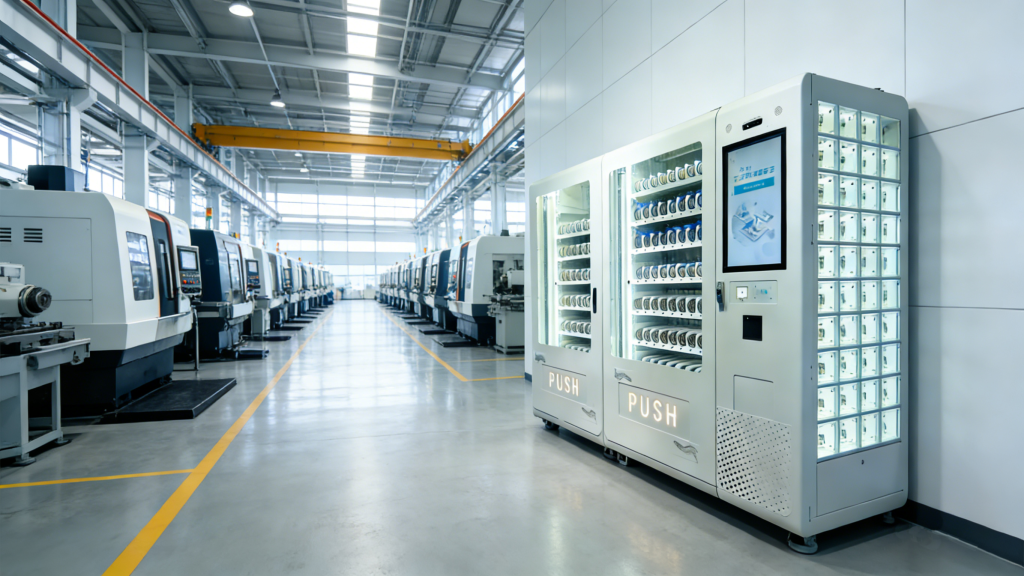
The complexity and unique nature of shipbuilding processes make tool management particularly challenging. The construction of a 10,000-metric-ton vessel involves hundreds of processes—including steel cutting, welding, grinding, and drilling—requiring thousands of different types of cutting tools. These range from large plasma cutting tools to precision milling cutters, with a vast range of specifications, and are used in various locations throughout the workshop. Under traditional management models, these pain points act like shackles, severely hampering the factory’s production efficiency.
The lack of systematic inventory management is the primary challenge. Traditional tool inventory relies on manual ledger records, which not only result in delayed updates but also make it easy for entries to be omitted or recorded incorrectly. Shipbuilding orders are subject to significant cyclical fluctuations; during peak seasons, demand for tools surges, often leading to production line shutdowns due to insufficient inventory; during the off-season, blind overstocking leads to massive tool backlogs, tying up substantial capital in warehousing, while also exposing the inventory to risks such as rust and wear and tear. According to industry research data, under the traditional model, the tool inventory turnover rate at foreign trade shipbuilding factories is generally below 50%, resulting in severe waste of capital.
Inefficiencies in the issuance and return of tools have exacerbated production delays. Workers must go through multiple steps—including filling out an application, obtaining approval and signatures, and manually locating the tools—to receive a set of tools; the entire process often takes more than half an hour. The return process is equally cumbersome, requiring item-by-item verification and inventory registration. If tools are damaged or lost, a complex process of tracing responsibility must be conducted, which not only consumes significant manpower but also often results in delays in tool circulation, affecting the seamless transition to subsequent production stages. During periods of high order volume, this inefficient management model directly lengthens production cycles and reduces order delivery efficiency.
The lack of wear-and-tear control has become a cost black hole. In shipbuilding operations, the wear rate of cutting tools is extremely high, but traditional management methods make it difficult to track this accurately. Cutting tools are issued haphazardly and operated in violation of regulations, leading to excessive wear and even scrapping—yet it is impossible to pinpoint the exact causes of this wear or identify those responsible. At some factories, tool wear and tear costs account for as much as 15% or more of production costs, becoming an invisible black hole that devours profits and puts the factories at a disadvantage in price competition.
The constraints posed by information silos hinder management upgrades. Data on traditional cutting tool management is scattered across paper ledgers and the memories of different individuals, making it impossible to establish a unified, real-time data system. Factory managers find it difficult to track key information such as tool usage frequency, wear patterns, and inventory trends. Consequently, they lack a scientific basis for procurement decisions and production scheduling, and are unable to integrate with the factory’s overall intelligent production system—a shortcoming that hinders the factory’s digital transformation.
II. Technology-Driven Innovation: The Core Functions and Value Proposition of Smart Tool Cabinets
Intelligent tool cabinetIts emergence has broken the deadlock in traditional cutting tool management. Supported by cutting-edge technologies such as the Internet of Things, big data, and artificial intelligence, it has established a comprehensive, intelligent cutting tool management system that provides a key driver for improving efficiency at foreign trade shipbuilding factories.
Precise inventory management to reduce costs and improve efficiency.Intelligent tool cabinetEquipped with high-precision sensors and an intelligent recognition system, the system monitors information such as the type, quantity, and specifications of cutting tools inside the cabinet in real time. The data is automatically synchronized to a cloud-based management platform to generate a dynamic inventory ledger. When inventory falls below a preset threshold, the system automatically issues a restocking alert to prevent stockouts and supply disruptions. At the same time, the system intelligently forecasts tool demand based on order requirements and historical consumption data, optimizing stocking strategies and reducing excess inventory. Through precise control, the factory’s cutting tool inventory turnover rate can be increased to 85% or higher, significantly reducing capital tied up in inventory and improving cash flow efficiency.
Automated tool checkout and return enhance circulation efficiency. Using multiple identity verification technologies—including facial recognition, fingerprint recognition, and employee ID card recognition—workers can quickly complete identity verification and self-serve to retrieve the tools they need; the cabinet door automatically pops open, and the entire process takes only a few seconds. Upon return, workers simply place the tools in the designated compartment, and the system automatically identifies and logs them—all without any manual intervention. This unmanned operation model completely eliminates the time and space constraints of traditional tool checkout and return processes, improving tool circulation efficiency by over 90%. It effectively ensures the continuous operation of production lines and lays a solid foundation for on-time order delivery.
Implement precise loss control to reduce production costs.Intelligent tool cabinetA dedicated electronic record is created for each cutting tool, tracking information such as usage duration, frequency, operator, and wear and tear in real time. If a cutting tool shows abnormal wear, the system immediately issues an alert and precisely traces the issue back to the specific operation and the responsible person, effectively eliminating non-compliant operations and human-caused waste. At the same time, the system uses tool wear data to optimize tool selection and replacement cycles, preventing unnecessary wear and tear. This helps factories reduce tool wear costs by more than 30%, effectively cutting production costs and increasing profit margins.
Data-driven decision-making supports and empowers scientific management.Intelligent tool cabinetIts cloud-based management platform enables in-depth mining and analysis of cutting tool usage data, generating visual reports that clearly present key information such as usage trends, inventory movements, and wear distribution. Using this data, factory managers can precisely control production rhythms, optimize procurement plans, adjust production schedules, and achieve optimal resource allocation. At the same time, this data can be seamlessly integrated with the factory’s ERP, MES, and other management systems, breaking down information silos and driving the overall management of the factory toward smarter and more refined operations, thereby providing strong support for scientific decision-making.
III. Practical Implementation: Results of the Smart Tool Cabinet’s Application in Foreign Trade Shipbuilding Factories
Based on the experience of numerous shipyards engaged in foreign trade,Intelligent tool cabinetThe effectiveness of this application has been fully proven; not only does it address the pain points of traditional tool management, but it also demonstrates strong value creation across multiple dimensions, including efficiency improvements, cost control, and quality assurance.
A large foreign trade shipbuilding plant had previously experienced more than 50 hours of downtime each month due to disorganized cutting tool management, with cutting tool wear and tear costs accounting for as much as 18% of total costs, severely impacting order delivery and profit margins. The introduction ofIntelligent tool cabinetSubsequently, the factory implemented a comprehensive overhaul of its cutting tool management system. Through intelligent inventory control, the rate of cutting tool shortages was reduced to zero, and production line downtime due to material shortages was significantly shortened; an automated tool issuance and return system increased cutting tool circulation efficiency by 95% and shortened the average production cycle by 15%; Precise wear-and-tear control has reduced the proportion of tool wear costs to 12%, resulting in annual cost savings exceeding 10 million yuan. At the same time, supported by data-driven decision-making, the factory optimized its procurement plans, reducing inventory capital tied up by 40% and significantly improving capital turnover efficiency. Thanks to efficient production management and stable delivery capabilities, the factory successfully secured multiple high-end international orders, substantially enhancing its market competitiveness.
Another factory specializing in the manufacture of small- and medium-sized vessels for international trade faces the challenge of small-batch, high-variety orders, resulting in frequent fluctuations in tool demand—a situation that traditional management models struggle to accommodate.Intelligent tool cabinetThe introduction of this system solved this problem. Based on order requirements and production plans, the system dynamically adjusts tool inventory to precisely meet the tool needs of small-batch orders, thereby avoiding excess inventory and the risk of stockouts. At the same time,Intelligent tool cabinetIts precise traceability features have effectively standardized worker operations, reduced the product defect rate caused by improper handling, and increased the product pass rate by 8%. Thanks to efficient tool management and consistent product quality, the factory has earned high praise from customers, with order volume increasing by 30% year-over-year, successfully standing out in the fiercely competitive market.
In addition to direct efficiency and cost-effectiveness,Intelligent tool cabinetIt also provides strong support for compliance management and brand building at shipyards engaged in foreign trade. In foreign trade orders, customers have strict requirements regarding a shipyard’s compliance management and quality control.Intelligent tool cabinetThe end-to-end data traceability feature ensures that every step of tool management is fully documented, meeting customers’ requirements for supply chain transparency and enhancing the factory’s compliance management standards. At the same time, this intelligent management model demonstrates the factory’s technological capabilities and management standards, helping to shape a high-end brand image, strengthen customer trust, and lay a solid foundation for expanding into international markets.
IV. Future Outlook: Smart Tool Cabinets Drive the Intelligent Upgrade of Shipbuilding Factories
As the global manufacturing industry accelerates its transition to smart manufacturing,Intelligent tool cabinetIts value extends far beyond improving the efficiency of cutting tool management; it will also serve as a key driver for the overall intelligent upgrade of foreign trade shipbuilding yards, providing sustained momentum for the yards’ long-term development.
In the future,Intelligent tool cabinetIt will be deeply integrated with the factory’s smart manufacturing system to create a collaborative and efficient production ecosystem. By interfacing with the MES system,Intelligent tool cabinetAutomatically matches the required cutting tools based on production orders, completing tool preparation in advance to ensure a seamless transition between production and tool supply; By integrating with the equipment management system, it monitors the compatibility between cutting tools and production equipment in real time, providing timely alerts for equipment malfunctions and tool anomalies to ensure stable production operations; by coordinating with the supply chain system, it enables intelligent end-to-end management of cutting tool procurement, inventory, and distribution, improving supply chain responsiveness and allowing the factory to quickly adapt to changes in market demand.
The in-depth application of artificial intelligence technology will empowerIntelligent tool cabinetMore powerful forecasting and decision-making capabilities. By analyzing massive amounts of production data and tool usage data,Intelligent tool cabinetIt can predict order demand and cutting tool wear trends in advance, automatically generating optimal procurement plans and inventory strategies; at the same time, using AI algorithms, the system can also optimize cutting tool usage plans, allocate cutting tool resources efficiently, further improve cutting tool utilization, and reduce production costs. In addition,Intelligent tool cabinetIt will also have the ability to learn autonomously, enabling it to continuously optimize management models based on the production characteristics and needs of the factory, thereby delivering personalized and customized tool management services.
Amid the growing trend toward green manufacturing,Intelligent tool cabinetIt will also help foreign trade shipbuilding factories achieve sustainable development. Through precise loss control and inventory management, it reduces tool waste and resource consumption; at the same time, the system enables the分类回收管理 of scrap tools, promoting their recycling, reducing the factory’s carbon emissions and environmental impact, helping the factory build a green supply chain, meeting the strict environmental requirements of international markets, and enhancing the factory’s competitiveness in sustainable development.
For foreign trade shipbuilding yards,Intelligent tool cabinetThe application of this technology is not only an effective means of addressing current pain points in tool management, but also a strategic choice that aligns with the trend toward intelligent development and enhances core competitiveness. In today’s increasingly competitive global trade environment, efficiency is vital, and management is key to competitiveness.Intelligent tool cabinetHarnessing the power of technology to overcome the challenges of traditional management, unlock production potential, and provide comprehensive support for improving factory efficiency, controlling costs, ensuring quality, and advancing smart upgrades.
In the future, as technology continues to innovate and application scenarios continue to expand,Intelligent tool cabinetIt will play an increasingly important role in foreign trade shipyards and become the core driver of the industry’s intelligent transformation. Those who are the first to embraceIntelligent tool cabinetFactories that actively promote management innovation will undoubtedly seize the initiative in the global market. With efficient, smart, and green production models, they will write a new chapter in the foreign trade shipbuilding industry and, in the vast field of marine equipment manufacturing, ride the winds and cut through the waves toward a brighter future.
