 Zebra Smart—Smart Tool Cabinets, Smart Supply Cabinets, Smart RFID Tool Cabinets, Enterprise Production Supply Management System




Intelligent Weighing Material Cabinet: Unlocking a New Paradigm of Efficiency in the Management of Low-Value Consumables and Disposable Devices in Medical Institutions
As the wave of refined management sweeps through the healthcare industry, the operational management of healthcare institutions is facing unprecedented challenges. Low-value consumables and single-use medical devices, as indispensable basic supplies in medical diagnosis and treatment, play a critical role: the efficiency of their management is not only directly linked to the quality and safety of medical services but also profoundly impacts the operating costs and core competitiveness of healthcare institutions. Under traditional management models, numerous pain points—such as manual record-keeping, experience-based estimates, and rough inventory counts—have become bottlenecks hindering the efficient operation of healthcare institutions. The emergence of smart weighing supply cabinets, however, is revolutionizing the management of low-value consumables and single-use medical devices in healthcare institutions through disruptive innovation. It is paving a new path toward efficiency gains and reshaping the entire ecosystem of medical supply management.
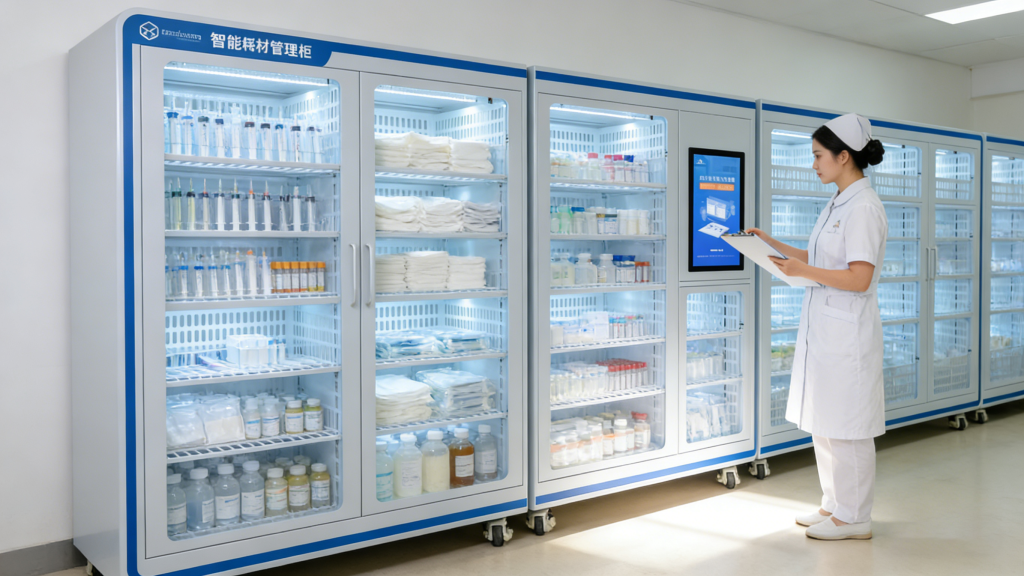
I. The Dilemma of Traditional Management Models: The Dual Constraints of Efficiency and Cost
In healthcare settings, low-value consumables and single-use medical devices are characterized by a wide variety of product types, high usage frequency, small quantities per use, and the need for highly precise management. Traditional management models have long been mired in inefficiency and high costs, with specific challenges centered on the following areas.
In terms of inventory management, manual inventory counts are not only time-consuming and labor-intensive but also highly prone to data discrepancies caused by human error. Some medical institutions conduct periodic, comprehensive inventory counts, which often require a significant investment of time and effort from medical staff. Furthermore, there is a time lag between the inventory results and actual inventory levels, making it impossible to accurately reflect real-time inventory status. When inventory backlogs occur, they not only occupy a significant amount of storage space but also increase the risk of supplies expiring or being wasted; conversely, inventory shortages can lead to interruptions in diagnosis and treatment, affecting the continuity of medical services and even jeopardizing patient safety.
In terms of the supply issuance process, the traditional manual registration model is extremely inefficient. When medical staff collect supplies, they must fill out issuance forms one by one and verify the supply information. This process is not only cumbersome and time-consuming but also leaves room for management loopholes such as unauthorized or excessive withdrawals. Although some medical institutions have introduced electronic registration systems, these still require manual intervention and cannot achieve full automation and intelligence throughout the entire process. As a result, the supply issuance stage has become a bottleneck in supply management, severely impacting the work efficiency of medical staff.
In terms of cost control, traditional management models lack precise data support. Since data on material consumption cannot be tracked in real time, it is difficult to accurately calculate the material costs for each department and each medical service, resulting in a crude cost accounting system that fails to provide a decision-making basis for healthcare institutions to implement refined cost control. At the same time, issues such as material wastage and loss are difficult to trace, further exacerbating operational cost wastage and placing healthcare institutions at a disadvantage when it comes to cost control.
In terms of compliance management, the management of low-value consumables and single-use medical devices must strictly adhere to relevant laws and regulations, with stringent requirements for all stages of the process—including procurement, storage, issuance, and traceability. Under traditional management models, there is a lack of end-to-end digital records for the flow of supplies. When quality issues arise, it is difficult to trace them accurately, which not only increases compliance risks but may also lead to medical disputes and damage the brand image of healthcare institutions.
These challenges are intertwined, creating a dilemma for traditional management models that severely hampers the operational efficiency and quality of development of healthcare institutions. There is an urgent need for an innovative solution to break free from the dual constraints of efficiency and cost.
II. Smart Weighing Material Cabinets: Technological Innovation Drives Management Reform
The smart weighing supply cabinet is not merely a storage device; it is a digital management terminal that integrates cutting-edge technologies such as smart weighing, the Internet of Things (IoT), big data, and artificial intelligence. With technological innovation as its core driving force, it injects new momentum into the management of low-value consumables and single-use medical devices in healthcare institutions, enabling a transformative leap from traditional,粗放 management to smart,精细 management.
From a technical architecture perspective, the smart weighing supply cabinet is equipped with high-precision load cells that can accurately track changes in the weight of supplies inside the cabinet in real time, converting weight data into quantity information to ensure precise measurement of supplies. At the same time, leveraging Internet of Things (IoT) technology, the supply cabinet can connect in real time to the medical institution’s supply management system, enabling real-time data transmission and sharing, and making information such as inventory status, issuance records, and consumption data readily accessible.
In terms of functional design, the smart weighing supply cabinet offers multiple key advantages. Its smart dispensing feature allows medical staff to quickly open the cabinet door using various authentication methods, such as swiping a card, fingerprint recognition, or facial recognition. The system automatically identifies the user and verifies their access permissions, enabling unattended, self-service dispensing. During the issuance process, the system automatically records information such as the type, quantity, and time of the issued supplies, eliminating the need for manual registration. This significantly improves issuance efficiency while preventing violations such as unauthorized or excessive withdrawals.
With real-time inventory monitoring capabilities—powered by high-precision load cells and intelligent algorithms—the supply cabinet can monitor the remaining stock levels in real time. When inventory falls below a preset threshold, the system automatically issues a restocking alert, prompting managers to replenish supplies promptly and prevent stock shortages from disrupting medical services. At the same time, the system can generate visual inventory reports that accurately display inventory dynamics and consumption trends, providing scientific data support for inventory management. This helps medical institutions achieve precise restocking and reduce excess inventory and losses due to expiration.
End-to-end traceability is one of the key features of the smart weighing supply cabinet. From inventory receipt, storage, issuance, and consumption to disposal, data from every stage is recorded and retained in real time, forming a complete supply chain. Should a quality issue arise with any material, the traceability system allows for the rapid identification of the problematic stage, precise tracking of the affected material’s flow, and the timely implementation of measures such as recalls and disposal. This effectively reduces compliance risks and ensures the safety of medical services.
Leveraging big data analytics, the smart material cabinet’s cost control functionality enables in-depth mining and analysis of material consumption data. It accurately calculates the material costs for each department and medical service, generating multi-dimensional cost analysis reports. Based on these reports, healthcare institutions can optimize material allocation, formulate scientifically sound cost control strategies, achieve refined cost management, and enhance operational efficiency.
These technological innovations and functional designs endow the smart weighing supply cabinet with powerful management capabilities, making it a key tool for healthcare institutions to overcome traditional management challenges and revolutionize supply management.
III. Practical Applications: Implementing Solutions Across Multiple Scenarios to Drive a Leap in Efficiency
Thanks to its outstanding technical advantages and functional features, the smart weighing supply cabinet has been successfully implemented across a wide range of scenarios in the management of low-value consumables and single-use medical devices within healthcare institutions. From outpatient clinics and inpatient wards to operating rooms and laboratory departments, it has comprehensively driven a significant leap in management efficiency, providing a solid foundation for the efficient operation of healthcare services.
In outpatient departments, low-value consumables such as cotton swabs, gauze, and syringes are characterized by high usage frequency and small quantities per use. Under the traditional management model, medical staff had to make frequent trips to the supply warehouse to retrieve supplies, which was not only time-consuming and labor-intensive but also hindered patient care efficiency. With the introduction of smart weighing supply cabinets, supplies are now stationed directly in outpatient departments. Medical staff can retrieve supplies on their own through identity authentication, eliminating the need for manual record-keeping. The time required for retrieval has been reduced from several minutes to just a few seconds, significantly improving efficiency. At the same time, the cabinets’ real-time inventory monitoring function promptly alerts managers to restock, ensuring an adequate supply of materials. This prevents disruptions to patient care caused by shortages and safeguards the efficient and orderly operation of outpatient services.
In the inpatient setting, the range of low-value consumables and single-use medical devices is particularly diverse, encompassing a wide variety of supplies such as IV sets, indwelling needles, and dressings, and the demand for these items is often unpredictable. The introduction of smart weighing supply cabinets to the inpatient ward has enabled precise management of supplies. Each nursing unit is equipped with a dedicated supply cabinet, allowing medical staff to accurately dispense supplies based on patient needs. The system automatically records dispensing information and links it to patient records, ensuring a precise match between supply consumption and patient care. At the same time, the cabinets’ end-to-end traceability feature allows for the precise tracking of the flow of every item. In the event of a medical dispute, problematic supplies can be quickly identified, providing strong evidence for dispute resolution and safeguarding the legitimate rights and interests of both patients and healthcare providers.
As the core setting for medical treatment, operating rooms place extremely high demands on the timeliness and accuracy of the supply of low-value consumables and single-use medical devices. During surgery, shortages or incorrect dispensing of supplies can directly endanger patients’ lives. The use of smart weighing supply cabinets in operating rooms has established an efficient supply support system. Before surgery, the system can pre-configure the required supplies based on the surgical plan and store them in dedicated supply cabinets. Medical staff can quickly retrieve them after identity verification, ensuring precise and timely supply. During surgery, if there is an unexpected need for supplies, medical staff can quickly retrieve them from the supply cabinets, and the system updates consumption data in real time to ensure the surgery proceeds smoothly. Postoperatively, the system automatically generates a list of consumed supplies, providing precise data for surgical cost accounting and supply review, thereby supporting the refined management of the operating room.
In laboratory settings, single-use testing supplies—such as blood collection tubes and test kits—have strict requirements for storage conditions and inventory management. Smart weighing supply cabinets not only accurately monitor inventory levels but also allow for the configuration of customized storage environment parameters based on the characteristics of the supplies, ensuring their quality during storage. At the same time, the system provides real-time statistics on the consumption of various laboratory consumables, offering data support for the laboratory’s procurement and cost control efforts. This helps prevent supplies from expiring due to excess inventory, reduces operating costs, and improves the laboratory’s management efficiency.
From outpatient clinics to inpatient wards, and from operating rooms to laboratory departments, the extensive practical application of smart weighing supply cabinets across various settings has comprehensively addressed the pain points of traditional management models, achieved a significant leap in supply management efficiency, and provided a powerful boost to the efficient operation of medical institutions.
IV. Demonstrating Value: A Multi-Dimensional Win-Win in Efficiency, Cost, and Compliance
The practical application of smart weighing supply cabinets in healthcare institutions has not only significantly improved the efficiency of supply management but has also demonstrated tremendous value across multiple dimensions—including cost control, compliance management, and service quality improvement—thereby establishing a new management framework for healthcare institutions that achieves a win-win outcome across efficiency, cost, and compliance.
In terms of efficiency improvements, the smart weighing supply cabinet has automated and streamlined processes such as supply issuance, inventory counts, and restocking, significantly reducing manual operations and lowering labor costs. The efficiency of supply issuance has improved markedly; medical staff no longer need to spend a great deal of time collecting supplies and can instead devote more energy to patient care, thereby enhancing the quality of medical services. Inventory counting efficiency has taken a quantum leap. The system performs real-time, automatic inventory counts, eliminating the need for manual on-site counting. Counting time has been reduced from several days to real-time completion, and the data is accurate and error-free, providing a reliable basis for inventory management.
In terms of cost control, smart weighing supply cabinets provide healthcare institutions with precise data support, helping them achieve refined cost management. By monitoring supply consumption data in real time and accurately calculating supply costs for each department and medical procedure, these cabinets help healthcare institutions identify weaknesses in cost control and formulate targeted cost management strategies. At the same time, precise inventory management effectively reduces excess inventory and losses due to expiration, minimizes material waste, and directly lowers operating costs. Furthermore, end-to-end traceability management effectively reduces issues such as lost or misappropriated supplies, further reducing operating costs and enhancing the economic efficiency of healthcare institutions.
In terms of compliance management, the smart weighing supply cabinet strictly adheres to the regulatory and policy requirements of the healthcare industry, establishing a comprehensive end-to-end compliance management system. Every stage of supply flow is recorded in real time, creating a complete electronic traceability chain that meets regulatory authorities’ traceability requirements for supply management. In the event of a quality issue with supplies, the system enables rapid and precise traceability, allowing for timely corrective actions to mitigate compliance risks. At the same time, the intelligent management process eliminates non-compliance resulting from manual operations, ensuring that supply management meets regulatory and policy requirements and safeguarding the compliant operations of healthcare institutions.
In terms of improving service quality, the use of smart weighing supply cabinets provides medical staff with convenient and efficient access to supplies, allowing them to devote themselves fully to patient care and thereby enhancing the focus and quality of medical services. The timeliness and accuracy of supply distribution are fully guaranteed, preventing interruptions in patient care caused by supply issues, thereby ensuring a positive patient experience and enhancing patient satisfaction. At the same time, this intelligent management approach elevates the overall management standards of healthcare institutions, establishes a modern and refined management image, and strengthens their core competitiveness.
With a leap in efficiency, optimized costs, guaranteed compliance, and enhanced service, the smart weighing supply cabinet delivers comprehensive value, laying a solid foundation for the high-quality development of medical institutions and ushering in a new chapter in medical supply management.
V. Outlook for the Future: Smart Upgrades Lead New Trends in Healthcare Management
As the digital transformation of the healthcare industry accelerates, smart weighing supply cabinets will also undergo continuous technological innovation and functional upgrades. In the field of low-value consumables and single-use medical device management within healthcare institutions, these cabinets offer even broader application prospects and are leading the way toward a new era of intelligent, precise, and eco-friendly medical supply management.
In the future, smart weighing supply cabinets will be deeply integrated with artificial intelligence technology to enable more intelligent decision-making in supply management. Leveraging machine learning algorithms, the system can conduct in-depth analysis of historical supply consumption data to accurately forecast supply needs for different departments and medical procedures, formulate replenishment plans in advance, and achieve precise forecasting and intelligent replenishment, thereby further improving inventory management efficiency and reducing inventory costs. At the same time, artificial intelligence technology enables intelligent monitoring of supply quality. By analyzing data such as weight and form, the system can identify any quality anomalies, provide early warnings of quality risks, and ensure the quality and safety of supplies.
In terms of functional expansion, the smart weighing supply cabinet will integrate more deeply with other management systems in medical institutions to build an integrated smart healthcare management system. It will seamlessly interface with electronic medical record systems, hospital information systems, and financial systems to enable coordinated interaction between supply management, clinical services, cost accounting, and financial management. For example, data on material issuance can be automatically linked to patient information and treatment procedures, enabling a precise match between material consumption and clinical services. This provides accurate data for cost accounting and performance evaluations, helping medical institutions achieve精细化管理 throughout the entire process.
In addition, smart weighing supply cabinets will continue to evolve toward smaller sizes, modularity, and customization to better meet the management needs of different healthcare institutions and scenarios. To address the limited space typically found in primary care facilities, compact and portable supply cabinets will be introduced to meet their supply management needs; To address the specific characteristics of supplies in different departments, customized storage solutions will be provided to ensure the quality of storage and management efficiency. At the same time, the energy consumption of these supply cabinets will be further reduced through the use of energy-efficient and eco-friendly designs and materials, aligning with the concept of green healthcare.
With continuous technological advancements and the ever-deepening application of these technologies, smart weighing supply cabinets will no longer be limited to material management alone but will become an integral part of the smart healthcare ecosystem. By deeply integrating with telemedicine, smart diagnosis and treatment, and supply chain management, they will provide medical institutions with comprehensive, integrated smart management solutions. This will drive the healthcare industry’s comprehensive transformation from traditional management to smart management and help medical institutions move steadily forward on the path of high-quality development.
Driven by technological innovation and grounded in practical application, smart weighing supply cabinets have brought about multidimensional breakthroughs in efficiency, cost management, and compliance for the management of low-value consumables and single-use medical devices in healthcare institutions, reshaping the landscape of medical supply management. Amid the wave of digital transformation sweeping the healthcare industry, smart weighing supply cabinets will undoubtedly continue to unleash their innovative potential. By offering smarter and more efficient management solutions, they will empower the high-quality development of medical institutions, lead medical supply management into a new era of greater intelligence and precision, and build a solid line of defense in supply保障 to safeguard public health.
